US Bolsters Mideast Presence: F-22s & USS Ford Deployed Amid Iran Tensions
The Middle East once again finds itself at a critical juncture, as the United States significantly escalates its military footprint in the region. This isn't merely a routine deployment; it represents the largest concentration of American forces since the 2003 invasion of Iraq. At the heart of this formidable show of force are two unparalleled assets: a fleet of F-22 Raptor fighter jets and the mighty USS Gerald R. Ford aircraft carrier. Their strategic positioning signals a clear message to Iran and its regional proxies, underscoring the US commitment to regional stability and its allies amid heightened tensions surrounding Tehran’s nuclear ambitions and destabilizing actions.
This massive buildup is not a sudden, knee-jerk reaction but a calculated move to deter potential aggression and protect US interests and partners. It comes at a time when diplomatic efforts with Iran over its nuclear program are described as a "last-chance effort," highlighting the delicate balance between diplomacy and deterrence. The deployments serve as both a defensive shield for allies like Israel and a potent offensive capability should deterrence fail, raising questions about the specter of a potential us middle east war.
Unprecedented Power Projection: F-22 Raptors Take Flight
The initial and most visually striking component of this buildup was the deployment of F-22 Raptor fighter jets. These machines, widely regarded as the most advanced fighter aircraft in the world, were first spotted lifting off from a UK air base before making their strategic landing in the Israeli desert. Their presence is an unmistakable signal.
- Stealth and Air Dominance: The F-22 Raptors are purpose-built to achieve air superiority. Their revolutionary stealth technology allows them to slip past enemy radar systems virtually undetected, giving them an unparalleled first-strike advantage. This capability is crucial for neutralizing sophisticated air defense networks and ensuring friendly forces can operate safely in contested airspace.
- Strategic Positioning: From their remote air base in southern Israel, the F-22s are within operational range of key Iranian air defense networks and potential infrastructure targets. This proximity ensures rapid response capabilities and puts immense pressure on Iranian strategic assets.
- Regional Deterrence: Beyond Iran, these jets are also strategically located to counter aerial threats to Israel from various fronts. This includes potential long-range missile or drone attacks from Houthi rebels in Yemen, who have previously demonstrated their capability to strike Israeli targets. The F-22's ability to "clear skies before other forces move in" is a vital component of any defensive or offensive strategy in the region.
The F-22 fleet, though relatively small in number (production ceased in 2011), represents the pinnacle of air combat technology. Their deployment is not just about raw power; it's about projecting an overwhelming qualitative edge designed to make any adversary think twice before initiating hostilities. This qualitative superiority aims to prevent a us middle east war by making the costs prohibitively high.
The Naval Behemoth: USS Gerald R. Ford and Its Strike Group
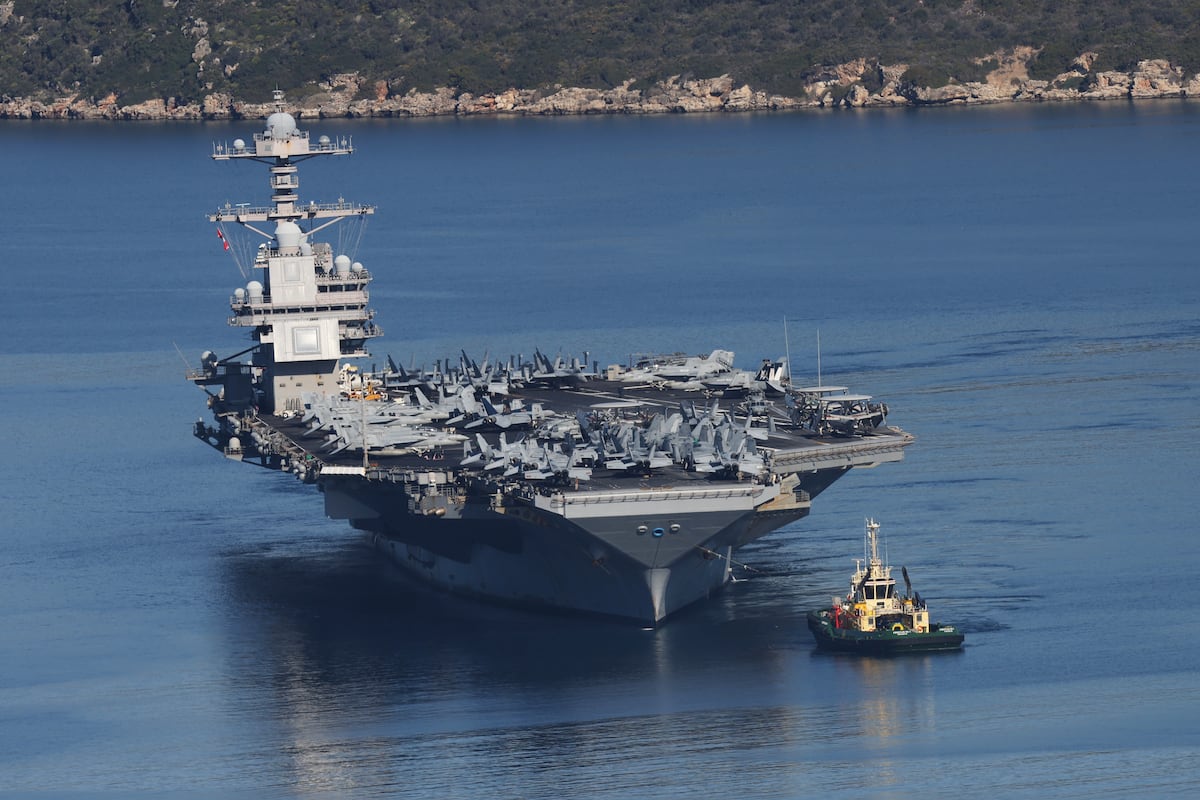
Complementing the aerial might, the US has also deployed an equally formidable naval asset: the USS Gerald R. Ford. As the world's largest aircraft carrier and the lead ship of its revolutionary class, the Ford represents the future of naval power projection. Departing with its full complement of over 5,000 sailors and aviators, along with a powerful strike force, its believed destination off the coast of Israel significantly amplifies the US presence.
A Floating Airbase and Defensive Shield
The USS Ford is far more than just a ship; it is a mobile, self-sufficient airbase capable of launching and recovering a wide array of advanced aircraft, including F/A-18 Super Hornets, E-2D Advanced Hawkeyes, and various support aircraft. This immense airpower can provide continuous surveillance, air defense, and precision strike capabilities across a vast operational area. Its deployment sends an unequivocal message:
- Unrivaled Power Projection: A carrier strike group (CSG) is the ultimate symbol of global power projection. The Ford, accompanied by a full escort of destroyers and submarines, brings layered defense capabilities (anti-air, anti-surface, anti-submarine warfare) and significant offensive firepower. This comprehensive package can conduct operations independently or as part of a larger coalition.
- Deterrence Against Direct Attacks: The presence of a CSG signals that the US and Israel are bracing for potential direct attacks from Iran and its regional proxy networks. The Ford's extensive air defense capabilities can intercept incoming missiles and drones, while its offensive punch provides a credible retaliatory threat. This significantly raises the stakes for any adversary contemplating an attack.
- Commitment to Allies: Positioning such a high-value asset in close proximity to a key ally like Israel reaffirms the unbreakable bond between the two nations and the US's unwavering commitment to Israel's security. It serves as a deterrent against regional destabilization that could otherwise precipitate a wider us middle east war.
The USS Ford’s advanced technologies, including its electromagnetic aircraft launch system (EMALS) and advanced arresting gear (AAG), allow for a higher sortie generation rate than previous carrier classes, meaning it can launch more aircraft in a shorter period. This enhanced operational tempo is critical in a fast-evolving threat environment.
Geopolitical Chessboard: Why This Buildup Matters
The combined deployment of F-22s and the USS Ford in such close proximity to Iran is a carefully calibrated maneuver on the geopolitical chessboard. It’s a multi-layered message aimed at several audiences, designed to navigate the treacherous waters of the ongoing US-Iran standoff.
Deterrence and De-escalation
At its core, this buildup is about deterrence. The US aims to:
- Signal Red Lines: Clearly delineate what actions from Iran or its proxies would be deemed unacceptable and potentially provoke a strong military response. This includes aggression against US personnel or assets, or significant escalation of Iran's nuclear program.
- Prevent Miscalculation: Ensure that Iranian leadership fully understands the overwhelming military capabilities they would face if they chose to escalate. The visible presence of such advanced weaponry reduces the likelihood of miscalculation that could inadvertently spark a broader conflict.
- Bolster Diplomacy: Ironically, military deterrence can create space for diplomacy. By demonstrating a credible threat, the US hopes to strengthen its hand in negotiations and encourage Iran to reconsider its maximalist positions regarding its nuclear program and regional activities. The aim is to resolve issues without recourse to a us middle east war.
The deployment underscores the gravity of the situation, especially in the context of persistent threats from Iranian-backed groups, including Hamas, Hezbollah, and various militias in Iraq and Syria. These groups often act as extensions of Iran’s foreign policy, capable of launching missile attacks, drone strikes, or other destabilizing actions that could rapidly escalate tensions.
Implications and the Path Forward: Avert or Escalate?
The current military buildup casts a long shadow over the Middle East, presenting both a potential deterrent to conflict and a risky escalation in its own right. The outcome hinges on a delicate balance of actions and reactions from all parties involved.
The Stakes of a Potential Conflict
The prospect of a direct "us middle east war" with Iran would carry immense costs, both human and economic, with far-reaching global implications:
- Regional Destabilization: A conflict would undoubtedly engulf the entire region, pulling in numerous state and non-state actors, leading to widespread chaos, humanitarian crises, and refugee flows.
- Global Economic Impact: The Strait of Hormuz, a critical choke point for global oil shipments, could be jeopardized, leading to skyrocketing energy prices and a severe disruption to the world economy.
- Cyber Warfare: Modern conflicts increasingly involve cyber warfare, which could cripple critical infrastructure far beyond the immediate battlefield.
However, the US strategy is to avoid such a scenario through overwhelming deterrence. The visibility and capability of the F-22s and the USS Ford are designed to achieve this psychological effect, making the cost of aggression too high for Iran to contemplate.
The Role of Diplomacy
Amidst the military posturing, diplomatic channels remain crucial. The US administration continues to engage with Iranian officials, albeit with limited success so far. The military buildup serves as a backdrop to these diplomatic efforts, providing leverage and demonstrating resolve. It reminds all parties that while military options exist, the preference is for a negotiated settlement that prevents further proliferation and regional instability.
Observing such developments requires careful consideration of official statements from all involved parties, as well as an understanding of the historical context of US-Iran relations. The goal remains to prevent a wider conflict, ensuring security for allies and stability for the global economy.
The deployment of F-22s and the USS Ford is a powerful and unambiguous statement of US resolve in the Middle East. It underscores Washington's commitment to protecting its interests and those of its allies, while simultaneously seeking to deter Iranian aggression and create an environment conducive to diplomatic solutions. As tensions remain high, the strategic placement of these key assets serves as a stark reminder of the immense power at play and the urgent need for de-escalation to prevent a devastating conflict in an already fragile region.